Search Engine Optimization (SEO) is not a strategy, but rather a spectrum of strategies. While the end goal is always the same, which is to enhance visibility on search engines, marketers and businesses take different approaches to achieve it.
Basically, there are three types:
-
- White Hat SEO,
-
- Black Hat SEO,
-
- Grey Hat SEO.
Let us understand each approach in detail.
White Hat SEO
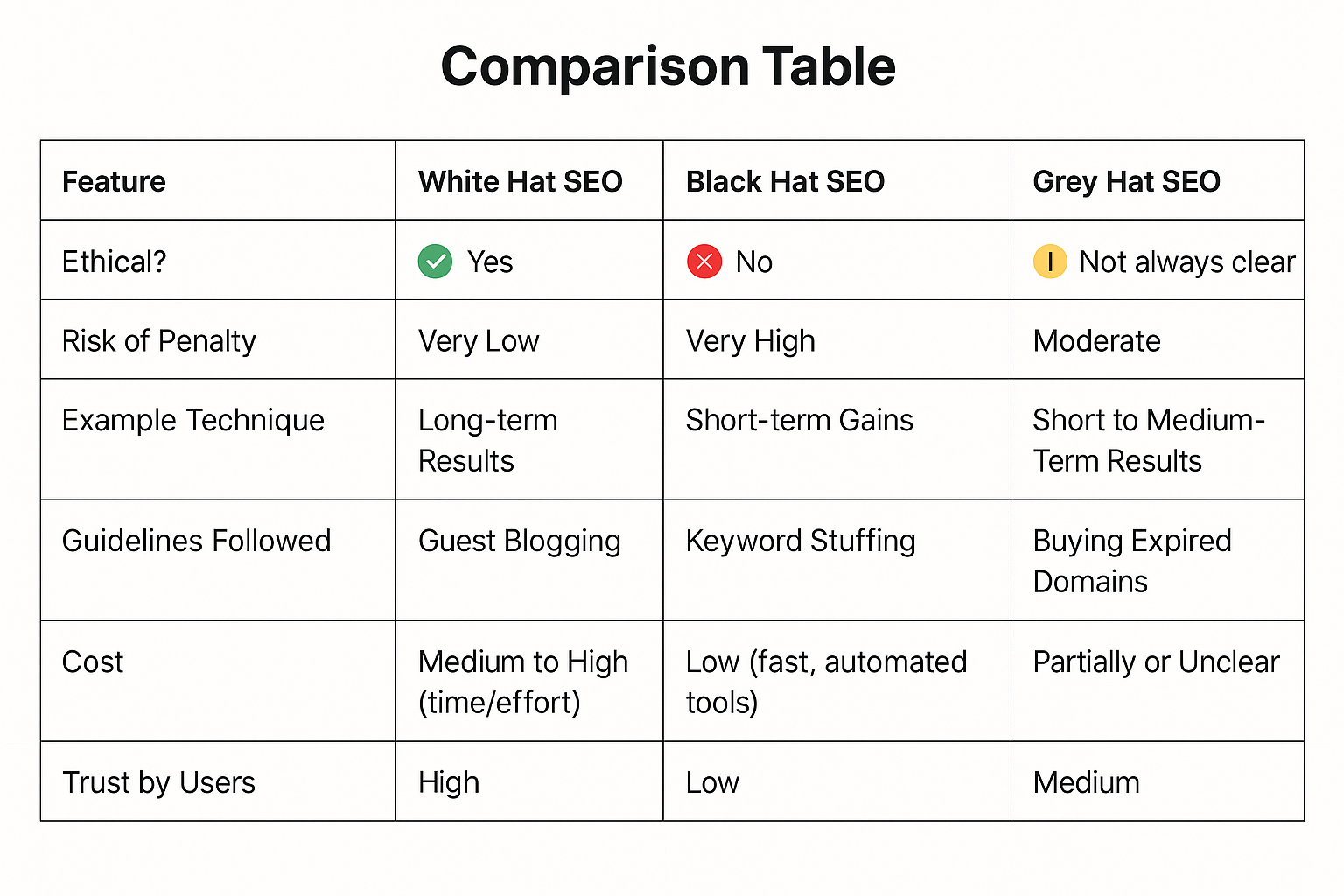
White Hat SEO is the process of optimizing a site with ethical and sustainable practices that are based on adhering to search engine guidelines. It focuses on the process of creating real value for users as opposed to manipulating the algorithms.
This approach may take time to demonstrate results, but it provides long term credibility and constant rankings.
Key Techniques in White Hat SEO :
- Developing high-quality/ original and informative content
- Performing proper keyword research but no keyword stuffing
- Optimizing website speed and mobile friendly
- Earning backlinks organically through guest posting, PR and relationship building
- Using clean meta tags, structured data, and descriptive alt text
Real-Life Example:
Say you’ve got a yoga blog and you publish an in-depth article “Best Yoga Techniques for Beginners.” The content is well-researched, easy to understand, and actually helpful. Health and wellness sites start linking to your article due to the quality of it. As time passes, you organically improve on your rankings.
This is White Hat SEO- Slow but sustainable, and very effective.
Black Hat SEO
This is unethical methods of trying to manipulate the algorithms of the search engines, in order to get quick rankings. These methods go against the search engine rules and have a high risk of being penalized.
While such methods may provide immediate success, they can hit a website’s reputation and visibility badly.
Common Black Hat Techniques:
- Keyword stuffing
- Cloaking (showing the search engine and user different content)
- Purchasing poor quality backlinks
- Hidden text or links
- Automatically generated/copied content
- Making Use of Private Blog Networks (PBNs)
Real-Life Example:
Let’s imagine that we have a website that sells fitness drink. Rather than developing useful content, it conceals repeated keywords such as “buy fitness drink online fast cheap now” in invisible text. Search engines would rank it initially higher but on detection, the website may be penalized or removed from search listings.
Risk Level-Extremely high.
Search engines constantly change their algorithm to be able to detect and penalize such practices.
Grey Hat SEO
Grey Hat SEO is somewhere in between White Hat/Black Hat. These techniques are not prohibited entirely but not fully endorsed as well. They are playing in a dangerous middle ground.
While they may not first get the penalties, they carry uncertainty and risk in the long-term.
Common Grey Hat Techniques:
-
- Writing slightly exaggerated or clickbait-style titles
- Content spinning (modifying existing content slightly to appear original)
- Purchasing expired domains with existing backlinks
- Creating microsites solely for backlink generation
- Overusing exact-match anchor text
Real-Life Example:
Suppose a brand buys an expired domain which already has some strong backlinks and then redirects it to their main website in order to gain authority. This is not exactly against the law, but it is not quite ethical.
Grey Hat strategies may be financially or otherwise successful for a short time–but are not stable in the long term.
Comparison Table